
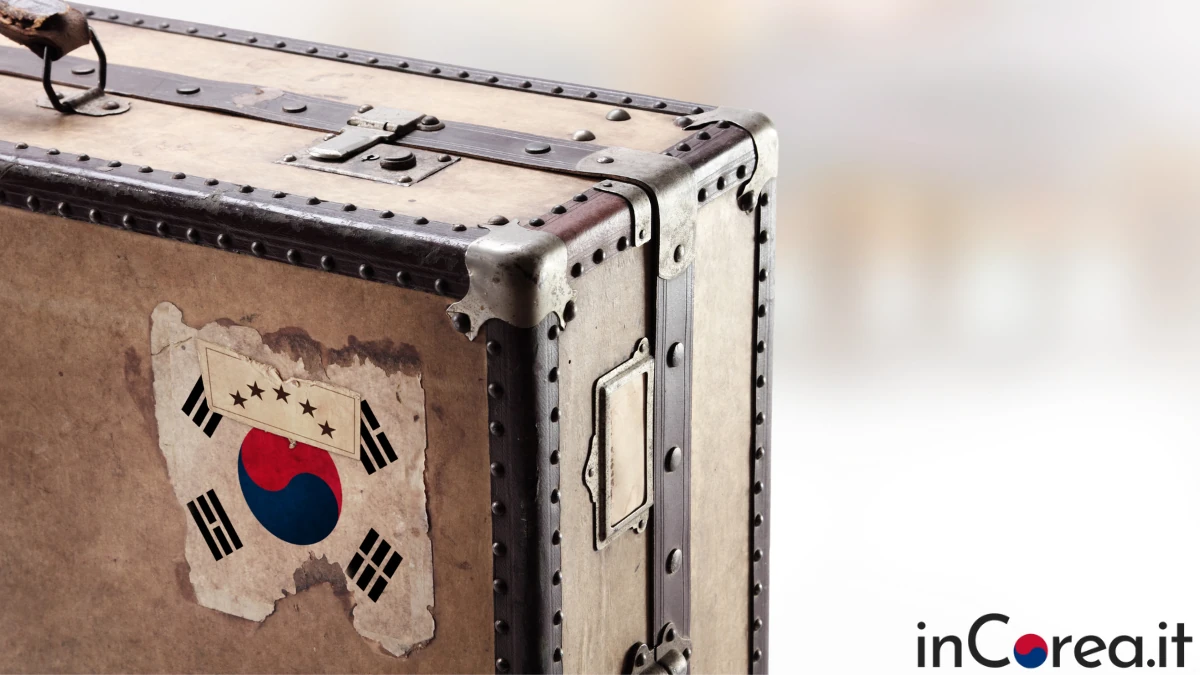
What to pack for Korea: travel essentials for your suitcase

What to bring to Korea. Comprehensive guide to choosing what to pack for a trip to Korea and Seoul

What to pack for a trip to Korea

What to pack for a trip to Korea

You’ve purchased your plane ticket, booked your hotel, and organized all the services you need for your trip to South Korea. Now the time has finally come to pack your suitcase, and you’re faced with the big question: what to pack? This comprehensive guide will clear up any doubts with practical tips and a selection of recommended products available on Amazon. Below, you’ll also find a full checklist of the best value-for-money items, including some not covered in the article but still very useful to make your trip as comfortable and stress-free as possible.

Below, you’ll also find a list of all the items selected for the best value for money — including some that I didn’t mention in the article but that can be really useful to make your trip as comfortable and relaxing as possible.

If you’ve already read our article on the best time to visit Korea, you’ll know that temperatures in Korea and Seoul can range from -10°C in winter to 35°C with extremely high humidity in summer. Thanks to this guide, you’ll have no more doubts about what to pack for Korea in every season.

Clicking the button below will take you to the complete list of recommended products for Korea. I’ve organized them by category and in ascending price order. You’ll also find additional items not mentioned in this article but equally useful for your trip. Hopefully, this will help you choose the right things to pack.

As an Amazon Affiliate, we earn a small commission when you purchase products through these links. This helps support and improve inKorea—at no extra cost to you.

The essentials: passport, credit cards, tickets

I wasn’t sure whether to include this section, but as a fan of checklists, I couldn’t resist. Here are the most important and mandatory items to bring with you to South Korea:

  • Passport: it’s a good idea to also bring a photocopy and leave it at your hotel in case of loss.
  • Debit/Credit Cards: bring at least two cards and make sure they are unlocked for worldwide use before you leave. If you have a Revolut card, take it with you to avoid paying foreign transaction fees.
  • Cash: check out our guide on how to handle cash and cards in Korea to avoid unnecessary payment fees.
  • Airline tickets, hotel bookings & service reservations: usually, digital versions are fine unless a printed copy is specifically required. Be careful: a printed airline ticket has a very different format than a digital one. If you show the “print version” ticket on your phone screen, it may not be accepted.
  • Travel Insurance

Carry-On Luggage: backpack or trolley?

  • Trolley: convenient to carry, and you won’t have any weight on your shoulders. This is the option I personally prefer because it allows me to organize the suitcase contents more effectively. The downside is that you won’t have both hands free while moving around.
  • Backpack: a practical solution that lets you travel hands-free. The disadvantage is that if something is at the bottom, you’ll often need to unpack and repack to reach it.

Below is a selection of the best trolleys and backpacks in terms of quality and price. The recommended trolleys are medium-sized—somewhere between the typical 55x40x20 cm cabin trolley and the large “closet on wheels,” which I don’t recommend unless you’re relocating. A medium size of about 67x46x32 cm is the perfect compromise for a 10–15 day trip. The suitcases suggested here are also available in S and L sizes. The recommended backpacks, on the other hand, fall within standard carry-on dimensions, so you can easily take them with you in the cabin.
American Tourister Sea Seeker - Medium-size soft suitcase
American Tourister Soundbox - Medium-size hard-shell suitcase
SZLX Travel Backpack - Affordable and best-selling model
Eastpak Pinnacle - Well-known durable brand, offering plenty of interior space.

How to organize your luggage

Everyone has their own method and preferences when it comes to packing, but here’s how I usually do it: for Korea, I always bring a medium-sized trolley as checked luggage and a backpack as my carry-on. In the trolley, I pack all my clothes and any extra shoes, always leaving some space for shopping. A must-have is using packing cubes or organizers to save space and keep clothes neat (you can find a recommended set in the Amazon list linked in this article). In my carry-on backpack, I pack liquids, personal hygiene items, medicines, and a change of underwear—useful for lasting at least 24 hours in the unfortunate event that your suitcase is lost, especially on flights with a layover. I also bring a book to read during the flight, a neck pillow, a sweatshirt to stay warm, and all electronic devices (note: power banks and any device with batteries are not allowed in checked luggage). Finally, don’t forget essential smartphone headphones if you want to watch your own content or listen to music during the flight.

What clothes to bring for each season

Experienced travelers know the golden rule when it comes to clothing: always dress in layers so you’re ready for any situation. The same applies in Korea. Of course, a couple of days before your trip, check the weather forecast for the city you’ll be staying in to get a clear idea of the conditions you’ll face. Here’s a breakdown by season:

  • Spring and Autumn: these are the most pleasant seasons, but they also come with the widest temperature swings. Mornings can be quite cold, requiring heavier jackets, while afternoons can feel warm. The trick is layering—carry sweatshirts and jackets in your backpack so you can put them on or take them off as needed. A raincoat and umbrella might be useful, but if rain isn’t forecast, you can always buy them locally if needed.
  • Summer: pack light, breathable clothing. Summers in Korea are hot and humid, with July being the wettest month. An umbrella and raincoat are essential to handle sudden downpours.
  • Winter: Winters are very cold, especially in Seoul, with strong winds. The best solution is to wear thermal base layers: socks, tights, and shirts. I highly recommend the Uniqlo Heattech series, which is a real lifesaver. It comes in standard, extra warm, and ultra warm versions, depending on the temperatures and your tolerance to the cold. The same technology is available for socks, pants, and tops. On top of that, bring a warm waterproof jacket, hat, scarf, and gloves. Don’t underestimate the Korean winter—it can be harsher than you expect.

What shoes to bring?

The answer is simple: the most comfortable shoes you have. Forget about heels, Converse, Vans, ballet flats, or other completely flat shoes with hard soles. You’ll be walking a lot, and your feet will need proper arch support. You should also choose shoes that can withstand the rain (or even snow if you’re traveling in winter). Personally, I usually bring just one pair of versatile shoes because I always want to leave plenty of room in my suitcase for shopping. However, if you have space, you might consider bringing two pairs. One of them must be the super-comfortable pair you’ll wear 90% of the time. Another essential tip is to bring waterproof shoes. Fortunately, today there are very comfortable models made with Gore-Tex. I recommend Nike and Asics models, as they are suitable for any season and even rainy days. They are among the most comfortable shoes on the market. I’ve personally used both and they’re incredible—maybe a bit pricey and not the most stylish, but when you walk nearly 20 km in a single day, your feet will thank you, and you’ll wake up the next morning without any issues. In addition to these two brands, I also recommend the New Balance Dynasoft Nitrel V5 GTX (available here on Amazon). They’re slightly more affordable but still extremely comfortable. You can also find them in the full list of recommended products.
In winter in Korea, even in the Seoul region, heavy snowfall is quite common. If there’s only light snow and temperatures are around 0°C, a Gore-Tex running shoe like the ones recommended above should be sufficient. However, if the snowfall is heavy, combined with icy conditions and temperatures dropping to around -10°C or lower, it’s better to opt for a proper winter shoe, designed specifically for warmth and resistance to extreme cold.

Electronics

  • Electrical outlets in Korea: South Korea uses Type C and Type F plugs, the same as in much of Europe, with a voltage of 220V and a frequency of 60Hz. Travelers from countries like the US, UK, or Japan will need a plug adapter or a universal travel adapter. Even if you don’t strictly need one, it can still be useful—for example, to charge multiple devices at the same time. Many hotels also provide convenient USB ports next to regular outlets. Charging your devices in the country of Samsung and LG won’t be a problem.
  • Power bank: This is essential when traveling in Korea. Whether you need to charge your smartphone or your pocket Wi-Fi, a power bank will keep you connected at all times. Especially if you’re traveling alone, keeping your phone charged is crucial—not only for staying in touch, but also for navigation (Naver Map will be your best friend in Korea). As for capacity, a 10,000mAh power bank is the best balance between size and performance. Keep in mind that many pocket Wi-Fi devices use USB Type-A cables, so make sure your power bank has at least one USB-A port.
  • Headphones: most planes provide an in-flight entertainment system with headphones, but the quality is often poor. I recommend bringing your own headphones, both to enjoy your own content and in case the airline’s system doesn’t work properly, which unfortunately can happen. I highly recommend using headphones with noise cancelling technology while traveling, especially for long journeys. If you want to learn more and find the model that best suits your needs, here’s a guide to the best noise cancelling headphones for travelers.
Important: always remember to pack all your electronic devices containing batteries (such as power banks, Bluetooth headphones, electric shavers, etc.) in your carry-on luggage. It is strictly forbidden to place them in your checked baggage. Each passenger may carry a maximum of two power banks, with a total capacity of up to 100Wh (about 25,000mAh).
Tessan universal adapter - With 2 USB Type-A ports and 2 USB Type-C ports

Xiaomi Powerbank - With compatible sockets to also charge pocket Wi-Fi devices

Samsung Galaxy Buds 3 - Comfortable for those who don’t like in-ear headphones. I use them regularly, really great!

Ugreen - Convenient for keeping cables and electronic devices tidy in your backpack

Medicines

Most common over-the-counter medicines are available in Korea, although they often come under different brand names and usually in lower dosages than you may be used to. For peace of mind, it’s a good idea to bring the medicines you normally use for headaches, fever, colds, stomach issues, coughs, and minor aches. This way you’ll be covered for any situation and won’t have to worry about searching for them during your trip.

If you need to take prescription medication, remember that, as on all international flights, you should carry your doctor’s prescription with you. Inspections are not very frequent, but if they do occur, it’s best to be prepared.

Also, be aware that some medicines legal in your country may be considered illegal in South Korea. Always check the official list on the Korean Customs Service website before traveling.

Travel health insurance

Closely related to the topic of medicines is the importance of travel health insurance. I strongly recommend purchasing insurance before leaving. Policies cost very little, and the small amount you spend can save you from enormous expenses in case of hospitalization, even for a minor accident. You can also choose to insure your luggage and add other useful protections. Personally, I always go with the AXA Total Shield plan because it’s one of the most comprehensive options available and, on average, is priced lower than many competitors for the level of coverage it provides.

Can you bring food to Korea?

Personally, if I ever bring food to Korea, it’s only as a gift. The local cuisine is so delicious and varied that I never miss food from home, even during longer stays. Pasta and other packaged non-animal products are usually not a problem. However, all food of animal origin is strictly prohibited, and bringing it can result in a hefty fine. If you really need to bring food and are unsure whether it’s allowed, check the official guidelines on the Korea Customs Service website.

Personal hygiene

  • Deodorant: in Korea, it’s a bit harder to find the deodorant brands many travelers are used to. The reason is that most Koreans naturally sweat less, so deodorant is less commonly used. If you need it, you can find Western brands more easily in large cosmetics chains such as Olive Young.
  • Toothpaste: you’ll find plenty of toothpaste options in Korea, but the flavors and formulations can be quite different from what you might be used to. If you’re picky, it’s a good idea to bring your preferred brand from home.

On this topic, here are some useful tips:

  • Razors: if you use manual razors, bring your own blades and handles, as they are more expensive in Korea.
  • Sanitary products: tampons are very difficult to find in Korea since they are not commonly used. If you prefer this type of product, make sure to bring your own supply.
  • Waxing and depilatory strips: these are also hard to find in Korea, so it’s best to bring them with you.
  • Bras: sizes above D are uncommon and often expensive, so consider packing what you need before your trip.

Useful tips

  • It is not necessary to bring shampoo and body wash. Unless you’re staying in an apartment, most hotels or guesthouses will provide them.
  • Same for towels, you’ll find them in your accommodation, so there’s no need to pack them.
  • Bring at least one change of underwear per day.
  • Don’t fill your suitcase to 100% before leaving. Most hotels have laundry facilities if you need them, and you’ll definitely want extra space for all the things you’ll buy in Korea. Leaving room in your luggage will save you trouble on your return trip.

All that’s left is to get your suitcase ready. If you want to discover all the products that might come in handy, check out the curated packing list for Korea and Seoul on Amazon above. With thousands of options available, I’ve selected only those with the best value for money. Once you know exactly what to pack in your suitcase, it’s time to close it up and set off for Seoul!