eSIM, SIM Card or Pocket WiFi? How to stay connected in Korea
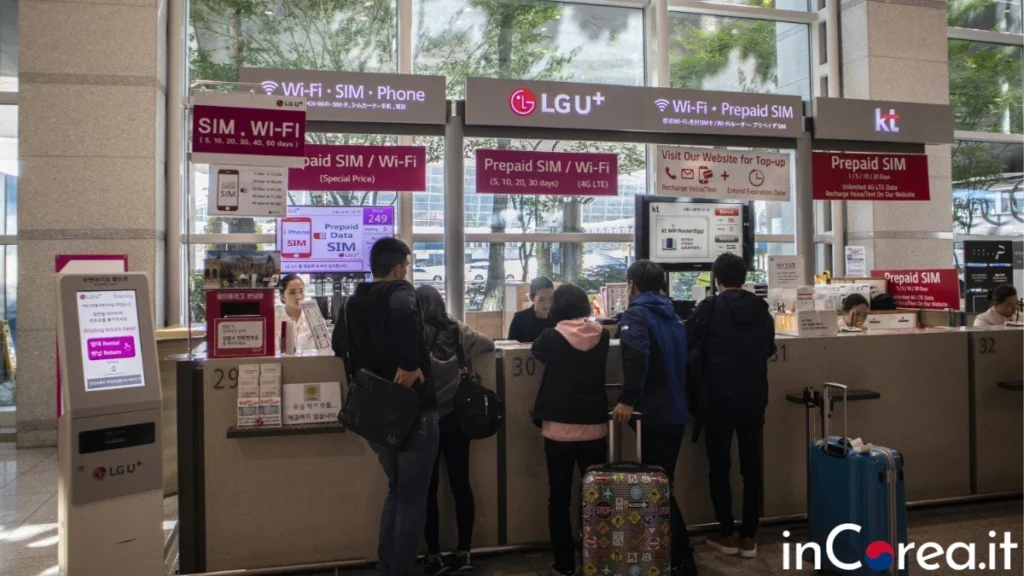
Counter to pick up Pocket WiFi and SIM Card at Seoul Airport - Incheon
Article Index
Do you need internet in South Korea? Differences between Pocket WiFi, eSIM, and SIM Card
If you’re planning a trip to South Korea, one of the first things to figure out is how to stay connected to the internet, essential for navigation, transportation, and travel apps. The three main options are: buying a SIM card, renting a Pocket WiFi (also known as a “WiFi Egg” or “portable WiFi router”), or activating a convenient eSIM (available only on compatible phones).
All three are reliable ways to get online, but each has differences that may affect your choice. A smart tip to save money is to book in advance, since purchasing directly at the airport is usually more expensive and takes longer. On this page, you’ll also find direct links from our partner Trazy.com to book your modem, SIM card, or eSIM at special prices. I personally always use Trazy when I travel to Korea—for pocket WiFi, sightseeing, and more—and it’s one of the easiest ways to stay connected in South Korea.
It’s important to know that when picking up a Pocket WiFi in South Korea at the airport, such as Incheon or Gimpo in Seoul, or Gimhae in Busan, you must have a credit card with you. As with all device or car rentals, debit and prepaid cards are not accepted. The card will only be used for a security deposit, which will be released once you return the modem. If you don’t have a credit card, consider purchasing an eSIM or SIM card for South Korea, as they do not require one.
Let’s now compare the various options, including all their pros and cons.
Rental of a Pocket WiFi modem (WiFi egg)
If you don’t need to make voice calls or send text messages, I highly recommend renting a Pocket WiFi in South Korea. This portable WiFi modem (also known as a WiFi Egg) lets you connect multiple devices at once. It’s my favorite choice, along with an eSIM, when traveling outside the European Union, as it’s far more convenient than using a temporary physical SIM card. Plus, with WhatsApp, Telegram, KakaoTalk, and other apps, you can easily make calls and stay connected without needing a traditional phone plan.
Another big advantage over a SIM card is the cost: the daily cost of a Pocket WiFi is lower than that of a SIM card, whether used alone or shared with others. A WiFi Egg can connect up to three devices simultaneously, making it ideal if you’re traveling with friends or family. Sharing the router also means you can split the cost and save even more.
When I use it alone, the battery life of the WiFi Egg almost always lasts me a full day on a single charge. Of course, the battery drains faster if it’s used by more than one person at the same time. That’s why I always bring a powerbank large enough to charge both my smartphone and the Pocket WiFi if needed. However, if you plan to split up often during your trip, having one WiFi Egg per person is the safest choice—I definitely recommend it. That way, no one risks being left without a connection. Regardless of how many modems you rent, I’d also stress that a power bank is one of the most important things to bring to Korea and pack in your luggage.
You can book your Pocket WiFi on Trazy.com using the buttons below. I’ve personally used Trazy and have always been satisfied. They offer the best prices, and the service is provided by SK Telecom (SKT), the largest telecom operator in South Korea.
As time goes on, more and more smartphones will support eSIMs, so this will likely become the most popular option. But what is an eSIM? It’s a fully digital SIM card that can be installed on your phone in seconds, no physical card required.
If you need to make voice calls, use mobile data, send text messages, or don’t have a credit card to rent a Pocket WiFi, buying an eSIM for South Korea is the best option. If you want to make and receive calls to a Korean number while using data and text messages during your trip, purchasing an eSIM (or a classic prepaid SIM card, which we discuss in more detail in the next section) is ideal.
Benefits of choosing an eSIM in Korea:
No need to insert any physical SIM card into your phone
No need to carry additional devices
Airport staff can assist you with installation if needed
Simply scan a QR code provided at the counter with your reservation
You can add an option on-site for phone calls and text messages.
Drawbacks: the main thing to keep in mind is to check if your smartphone is compatible with eSIMs, as only the latest models support this feature. Thanks to its convenience, eSIM is one of my favorite solutions for staying connected while traveling in Korea.
This is the least recommended option as it’s the most inconvenient: you need to physically install a new SIM card in your smartphone, and if you don’t have a dual SIM phone, you’ll have to remove your existing SIM. You’ll receive a new local Korean number to use with your smartphone, allowing you to make and receive local calls.
Important: if you need to make calls with your Korean number, you must clearly request it when receiving the SIM card. Only by purchasing the option labeled “with voice credit” (already preloaded) will you be able to make calls immediately; otherwise, you’ll have to request an additional top-up at the pick-up counter.
Possible drawbacks: because you’ll be using a new Korean number, you’ll need to inform friends and family, and some number-based apps like WhatsApp may stop working until you reset them.
One tip for avoiding issues: bring an older smartphone along with your current one. Register and insert the Korean SIM card into the old device, and use it for local calls while keeping your main phone unchanged.
I personally don’t recommend this SIM card option, as it’s more expensive and less practica, unless you absolutely need to make voice calls with a local Korean number and don’t want to use WhatsApp or other internet-based calling apps.
If you want to plan ahead and avoid having to pick up the SIM card after landing in Seoul, you can also purchase a Korean SIM card before you leave home. Various plans are available depending on how many GB of data you need. Keep in mind that the date you choose when ordering on Trazy.com is the order date itself. After receiving the card, you can confirm your actual arrival date in South Korea via a dedicated link.
Which to choose between eSIM, pocket wifi and SIM Card?
In conclusion, the choice between buying an eSIM, a SIM card, or renting a Pocket WiFi device in Korea depends on your personal preferences and travel needs. If you prefer a simple and straightforward solution, either Pocket WiFi or an eSIM is a great choice, especially if you also want to save money. If you don’t have a recent smartphone and need to use a Korean phone number while avoiding WhatsApp or Kakao calls, then the physical SIM card is the most suitable option.
All solutions can be purchased at Incheon, Gimpo, or Gimhae (Busan) airports as soon as you arrive in South Korea. Booking the service in advance will save you money and time, as you’ll only need to go to the phone company counter at Incheon arrivals (as shown in the main image), show your reservation, and pick up your eSIM, SIM card, or Pocket WiFi. While you can buy directly at the airport, prices are higher and devices may sell out, especially Pocket WiFi, later in the day.
I therefore advise you to book now via the links on the page to get the BEST PRICE. Ricorda che al momento della consegna del pocket wifi ti verrà richiesta la carta di credito per una piccola caparra. Alla fine del viaggio ti basterà restituire il device in aeroporto al banco dedicato e la caparra ti verrà restituita direttamente sulla carta. Buon viaggio e buona connessione in Corea! 🙂
We've detected you might be speaking a different language. Do you want to change to:

 Italiano
  English