
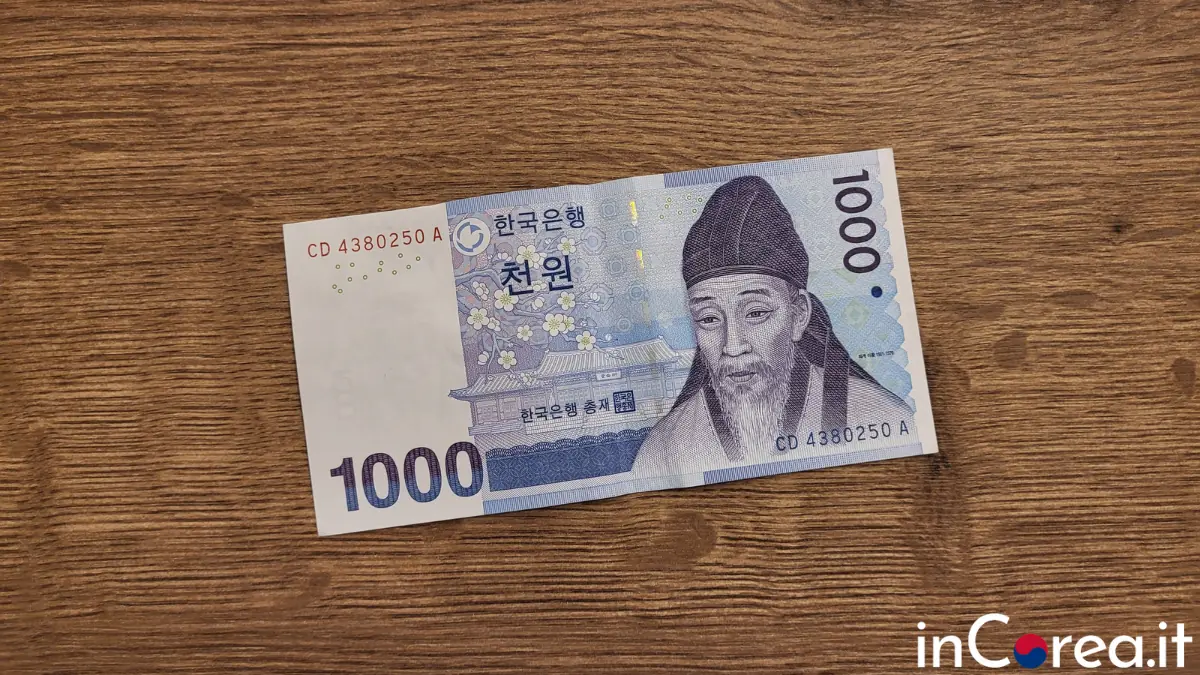
Through this guide on payments in South Korea, you will discover how and where to exchange money into Korean Won, where to withdraw cash, how to use debit and credit cards, and most importantly, how to save money on exchange rates and transaction fees. I have organized the guide into questions and answers so that it is as clear and practical as possible.
I want to make a couple of important points before getting into the details. In South Korea, you generally won’t need to carry much cash with you, as most Koreans use credit or debit cards, or Samsung Wallet (formerly Samsung Pay), for virtually all everyday purchases.
You’ll mainly need cash in two situations: to top up your T-Money Card (although kiosks that accept card payments for top-ups are becoming increasingly common) and to pay at some markets and street food stalls. Regardless of how you choose to pay in South Korea, I also recommend carrying some cash in your home currency as a backup. You don’t need to bring a large amount, but having enough to get you through a few days can be useful in case of an emergency, such as a malfunctioning card terminal or a lost card.
It’s also very important to bring multiple cards and unlock them for worldwide use before departure (more details on this later). Personally, when I travel I always carry several debit/credit cards. For example, on my last trip to Korea my main card worked in very few stores, and I had to rely on another card I luckily had with me.
With these points in mind, let’s look at the best ways to exchange currency and pay in South Korea, and how to save money on currency conversion fees and banking fees.
There are several ways to exchange foreign currency into Korean Won. If you don’t want to go through the entire list, the best and most convenient options are withdrawing cash using a Revolut card (even the free Standard version) or using WOW Exchange counters. For those who want to explore all the available choices, here is a breakdown:
There are several payment options in South Korea. Overall, the most cost-effective methods are using a Revolut card, a WOWPASS card, and in some cases even the simple T-Money Card.
If you want to save as much as possible on payments in Korea, here is a quick summary of the most cost-effective options for managing cash and transactions:
 Italiano Italiano Italiano
  English Italiano Italiano Italiano English