Guided Tour of the DMZ: on the border between South and North Korea
Article Index
DMZ: the Korean demilitarized zone
The Korean Demilitarized Zone, better known as the DMZ, is a buffer zone between South Korea and North Korea. If you’re planning to spend several days in the capital, you may also want to include a visit to the DMZ in your Seoul itinerary: it’s one of the most fascinating day trips you can take from the city.
Visiting this strip of land, which runs along the 38th parallel, is not only an opportunity to learn more about the modern history of the Korean Peninsula, but also a chance to better understand the tensions and hopes surrounding a peninsula that remains divided to this day.
Because of its international sensitivity, the DMZ can only be visited with authorized guides — independent access is not allowed. It is therefore mandatory to book a guided tour, and we strongly recommend making reservations well in advance, since daily entries are limited. Restrictions became even tighter after the 2023 incident involving a U.S. serviceman who crossed into North Korea.
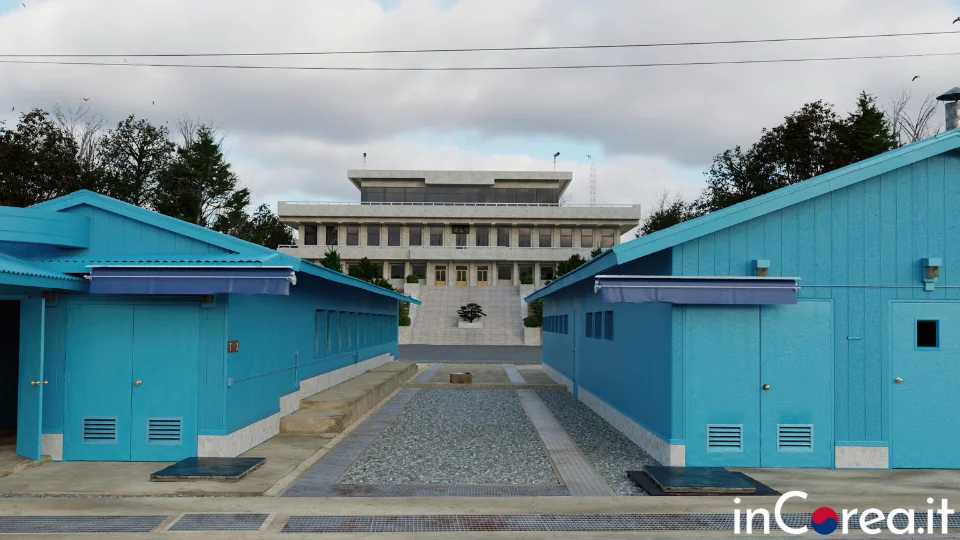
Within the DMZ lies the famous Joint Security Area (JSA), the only portion where North and South Korean forces stand face-to-face. It is here that official negotiations between the two Koreas occasionally take place.
In this article, we’ll cover the history of the DMZ, how to join a guided tour, practical information on how to get there, and the main highlights you can expect to see.
The guided tours of the DMZ are the only way for visitors to access this highly guarded area. Booking a guided tour is mandatory, and these experiences provide a unique perspective on the geopolitical complexities of the Korean Peninsula, while also presenting the history of the Korean War and its aftermath. During the tour, visitors have the chance to see observation posts, infiltration tunnels dug by North Korea, and the village of Panmunjom, where the Joint Security Area (JSA) is located.
All guided tours visit the same main attractions, so I recommend booking through Trazy, which consistently offers well-organized tours at the best prices. They also offer several options, including a 6-hour tour and a full 8.5-hour tour.
All guided tours depart from Seoul and include round-trip bus transportation. If you choose the 6-hour tour, the bus will pick you up near your hotel, and on the way back you can choose to get off at either Hongik University (Hongdae) or City Hall Station. The 8.5-hour tours depart from meeting points near Myeongdong, Hongik University (Hongdae), and City Hall, and return to the same stations.
When visiting the DMZ, it is important to strictly follow the instructions of your guides. Carrying your passport is required for entry. A visit to the DMZ is one of the most powerful and unforgettable sightseeing experiences in Korea, and we highly recommend it to every traveler. Book well in advance, as the number of visitors allowed into the DMZ each day is limited.
History of the Korean DMZ
The DMZ was established at the end of the Korean War in 1953, following the signing of the Panmunjom Armistice. This strip of land, about 4 km wide and 250 km long, is surrounded by barbed wire, landmines, and military posts, making it one of the most heavily fortified borders in the world. Although no direct military hostilities have taken place for decades, the DMZ remains a powerful symbol of Korea’s division and continues to attract visitors who want to better understand this unresolved chapter of modern history.
The DMZ is divided into two zones, one controlled by South Korea and the other by North Korea. In the middle lies the Joint Security Area (JSA), where representatives of the two sides meet under UN supervision to conduct talks and negotiations.
What to see in the DMZ
The DMZ includes several key attractions that help visitors understand Korea’s complex history and its hopes for the future. The Third Infiltration Tunnel, discovered in 1978, is one of the underground tunnels built by North Korea to prepare for a possible surprise attack on the South. Today, visitors can walk through part of this tunnel, bringing them physically close to North Korea.
Another highlight is the Dora Observatory, which offers a rare view across the border, including the sight of a massive North Korean flag. Panmunjom and the JSA allow visitors to stand in the exact place where the armistice agreements were signed and where delegates from the two Koreas have met face-to-face. Equally symbolic is Dorasan Station, a railway station built to connect the South and North, standing as a powerful reminder of the hope for reunification.
Visiting the DMZ offers a unique perspective not only on Korea’s past, but also on its future. Through guided tours, you can get close to one of the most sensitive borders in the world while gaining a deeper understanding of Korean history. Visiting the DMZ with a guided tour is an experience not to be missed when traveling to South Korea.
If you’re looking for other experiences outside the capital, you can explore the best day trips from Seoul and choose the one that best fits your itinerary.
We've detected you might be speaking a different language. Do you want to change to:

 Italiano
  English