US soldier arrested in North Korea: probable case of desertion
Recently, a U.S. Forces soldier was detained by North Korean authorities after crossing the Military Demarcation Line that separates the two Koreas. The United Nations Command, which has been present in the area since 1953, made the news public. According to the official statement, “An American citizen who was on an orientation tour in the Joint Security Area crossed, without authorization, the Military Demarcation Line into the Democratic People’s Republic of Korea.”
It is presumed to be a case of desertion, although the exact circumstances remain unclear. A U.S. official interviewed by CNN confirmed the defection hypothesis, a theory also supported by a witness who told CBS he saw the soldier “running along the North Korean border with a smile on his face.” Other officials reported that the serviceman was scheduled to be removed from South Korea for disciplinary reasons, but managed to leave the airport after passing through security, later joining a tour group in the area before crossing the border into North Korea.
At a Pentagon press conference, U.S. Secretary of Defense Lloyd Austin stated that the soldier “voluntarily crossed the border into North Korea and is now in the custody of the authorities in Pyongyang.” This incident risks further aggravating tensions between Washington and Pyongyang, as well as with their closest ally, China.
Escape on the world's most controlled border
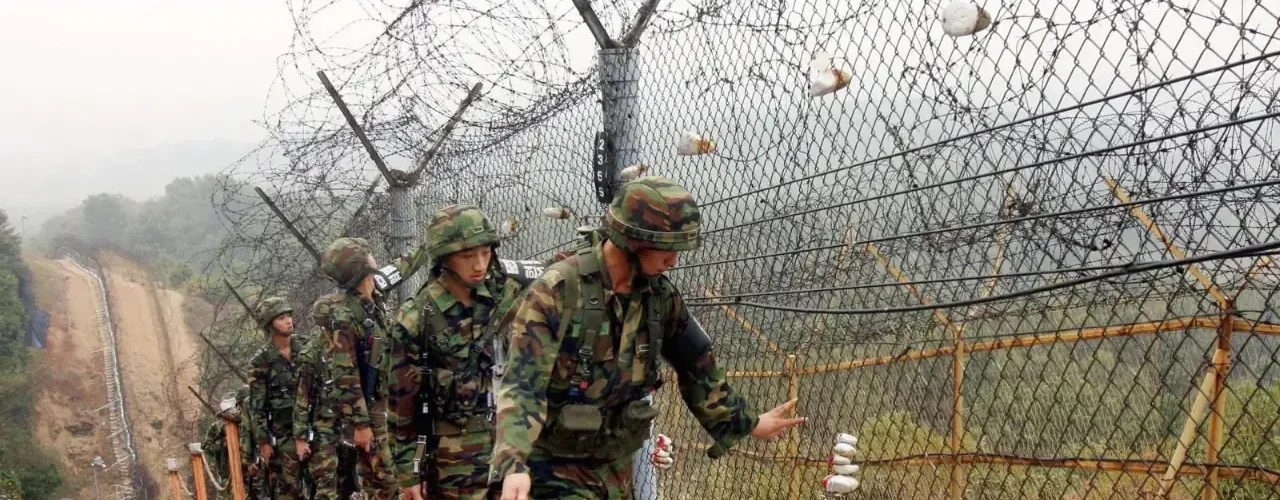
The incident took place in Panmunjom, the village located about 100 kilometers from Seoul, where the armistice ending the Korean War was signed in 1953. This village is open to tourists who wish to visit the Joint Security Area. The Demilitarized Zone (DMZ), stretching 250 kilometers, is considered one of the most fortified borders in the world. It is surrounded by miles of barbed wire and landmines, and guarded by soldiers from both sides.
Despite this, the southern part of Panmunjom—accessible only under strict rules and precautions—can still be visited by tourists from Seoul, about 100 kilometers away.
The UN Command did not provide many details about the American soldier for several hours. However, according to South Korean newspaper Dong-a Ilbo, cited by Reuters, the individual involved was a U.S. Army private identified as Travis King. Many questions remain unanswered, including whether the act was voluntary and what his motivations were.
We've detected you might be speaking a different language. Do you want to change to:

 Italiano
  English