Flood in South Korea: 41 dead and dozens missing and injured
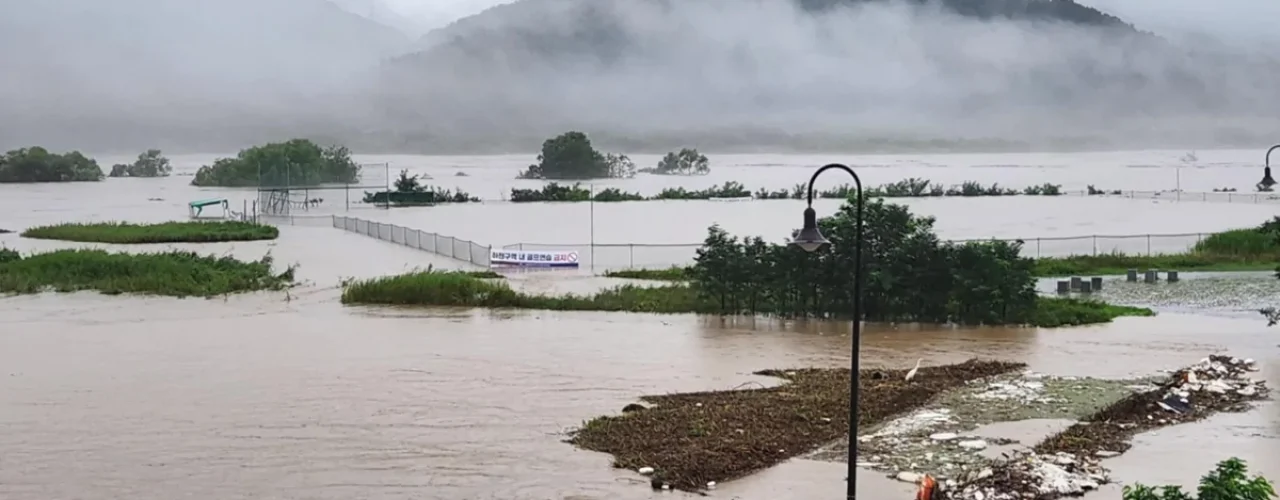
For more than seven days, South Korea has been experiencing relentless rain that has claimed 41 lives due to landslides and flooding. Heavy rainfall has hit the country since July 9, causing growing devastation. In addition to the fatalities, 35 people have been reported injured—a number that could rise quickly if the rains continue. Rescuers are still searching for nine missing individuals, mostly due to landslides in the mountainous Northern Gyeongsang province, the worst-affected area. To respond to the emergency, the government has mobilized more than 10,000 soldiers to support relief operations.
The heavy rains have also forced more than 12,000 people to evacuate their homes and caused power outages affecting about 28,000 households nationwide.
Osang tunnel disaster
Most of the victims—14 people—were found in the Osong underground tunnel, located in the city of Cheongju in Korea’s central-western region. In this area, dozens of vehicles, including a bus, were trapped in a sudden landslide that caused the passageway to flood with water and mud in just three minutes, leading to the collapse of the nearly 700-meter-long tunnel. Authorities immediately mobilized divers and other workers to rescue the survivors and recover the bodies of the victims. Search operations inside the tunnel were concluded on Monday night.
The tunnel was located only 600 meters from the Miho River, which had already overflowed on the evening of July 15. Relatives of the victims said authorities should have closed the tunnel earlier, given the heavy rainfall in Cheongju—more than 54 cm recorded since July 9. Police have announced the launch of an investigation into the flooding, according to Yonhap News Agency.
Transportation situation and duration of the emergency
The transportation system has also been severely affected in many areas, with 140 roads rendered impassable due to flooding. Rail lines have been disrupted, and traveling by train is nearly impossible because of damaged tracks.
The Korea Meteorological Administration, the country’s national weather agency, predicts that heavy rains will continue until at least Wednesday, July 19, mainly affecting central and southern regions of Korea. The areas most at risk are those that have already suffered extensive damage in recent days, such as South Jeolla Province, which has recorded between 30 and 60 mm of rainfall in just a few hours. In some affected regions, more than 60 cm of rain has fallen in three days. Considering that South Korea’s average annual rainfall is between 100 and 180 cm, the severity of the situation becomes clear.
President Yoon Suk-yeol criticized local officials for their inadequate response to the floods, saying they failed to follow proper emergency management guidelines. During a visit to Gyeongsang Province, one of the hardest-hit areas, he also warned that extreme weather events like this—although unusual—will unfortunately become more frequent as a result of climate change.
Severe weather has also impacted many other parts of the world. Earlier this month, relentless flooding struck India, Japan, China, Turkey, and the United States, not to mention the recent devastating floods in Italy’s Emilia-Romagna region.
We've detected you might be speaking a different language. Do you want to change to:

 Italiano
  English