
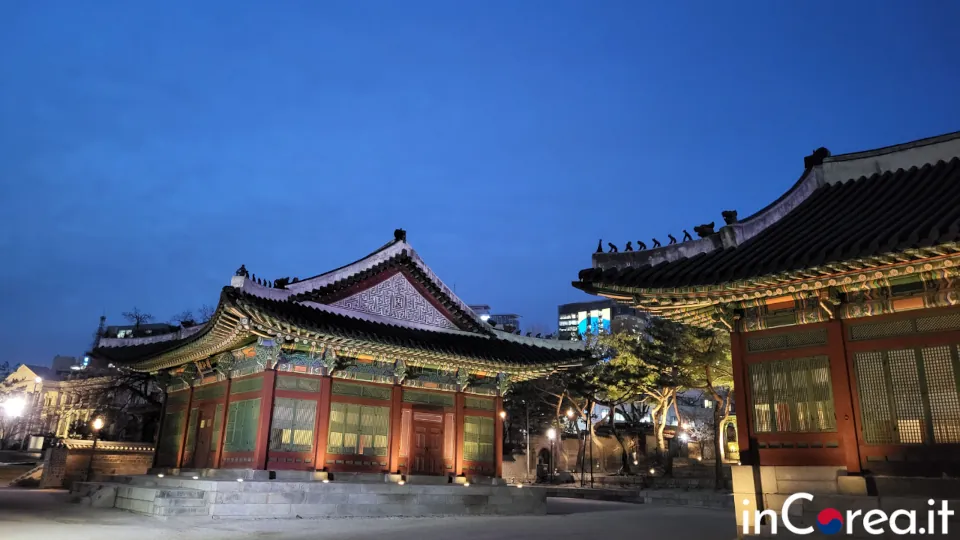
Among the royal palaces of Seoul built during the Joseon Dynasty, Deoksugung Palace is one of the most distinctive, it is the only one that features Western-style buildings within its grounds. Originally the residence of Prince Wolsan, brother of King Seongjong, the palace housed members of the royal family from the 15th century until Korea’s annexation by Japan in 1910.
When most palaces were burned during the Japanese invasion of 1592, Deoksugung became the official royal palace until 1618, when Changdeokgung Palace was rebuilt and reinstated as the main royal residence. From then on, Deoksugung served as an auxiliary or temporary palace.
In 1896, King Gojong ordered major restorations and returned to live there the following year. About $80,000 was invested in expanding the palace facilities, and by 1900 electricity and fencing had been installed. Even after Emperor Gojong abdicated in favor of Emperor Sunjong, he continued to reside in Deoksugung. Unfortunately, a fire in 1904 destroyed several of its buildings.
Under Japanese rule after 1910, the palace gardens were turned into a public park, the grounds were reduced to one-third of their original size, and the number of buildings shrank to just one-tenth. In fact, the palace once covered an area three times larger than today, extending over what is now Seoul City Hall and City Hall Plaza.
Throughout its history, the palace underwent several name changes: in 1611 it was renamed Gyeongun-gung, then Seogung in 1618. Finally, in 1907, it was given the name Deoksugung, meaning the "Palace of Virtuous Longevity," in honor of Emperor Sunjong’s wish for a long and prosperous reign.
If you want to truly understand the history and secrets of Deoksugung Palace, joining a guided tour with a knowledgeable local guide is highly recommended. Here are some of the most popular options:
Explore the palace in depth with a half-day guided visit, where you’ll learn fascinating stories about its architecture, history, and the Joseon Dynasty.
Choose between morning, afternoon, or full-day itineraries covering several of Seoul’s royal palaces. Deoksugung Palace is included only on Tuesdays, both in the morning option and in the full-day tour, so make sure to plan accordingly.
Deoksugung Palace is open daily from 09:00 to 21:00 (last admission at 20:00). Please note that the palace is closed on Mondays.
Visitors to Deoksugung Palace can watch the impressive Changing of the Royal Guard ceremony at the main entrance. The event takes place three times a day: at 11:00, 14:00, and 15:30.
The ceremony is held in front of the Daehanmun Gate and is one of Seoul’s most popular cultural reenactments. During the Joseon Dynasty, the royal guards were responsible for opening and closing the palace gates and protecting the surrounding area.
Today, the guard ceremony has been meticulously recreated based on extensive historical research, including the traditional costumes and procedures of the time. The performance lasts about 20 minutes and is considered one of the must-see attractions in Seoul.
If you plan to visit more than one palace, consider purchasing the Royal Palace Pass. This combination ticket costs 10,000 won and grants entry once to all four main royal palaces in Seoul, Gyeongbokgung, Changdeokgung (including the Secret Garden), Changgyeonggung, and Deoksugung, as well as Jongmyo Shrine. The pass is valid for three months, making it an excellent option for travelers exploring Seoul’s cultural heritage.
The easiest way to reach Deoksugung Palace is by subway. Take Line 1 or Line 2 to City Hall Station and use exits 1, 2, or 12. The palace entrance is just a short walk from the station.
Address: 99, Sejong-daero, Jung-gu, Seoul
Outside the palace grounds stretches a picturesque stone wall that runs along a scenic path leading from the main gate of Deoksugung to Jeongdong-gil Road. This spot is beloved by visitors, often captured in photographs thanks to its unique charm. Interestingly, there is a local saying that couples who walk this path together may soon separate — a superstition likely inspired by the nearby divorce court.
It is a stone building strongly influenced by thewestern neoclassical architecture, features a veranda at the front and sides of the structure as a distinctive feature. The fountain in front of the palace was the first ever fountain to be built in Korea. The construction of a Western-style building within Deoksugung was part of the modernization policies adopted during the Korean Empire period.
 Italiano Italiano Italiano
  English Italiano Italiano Italiano English