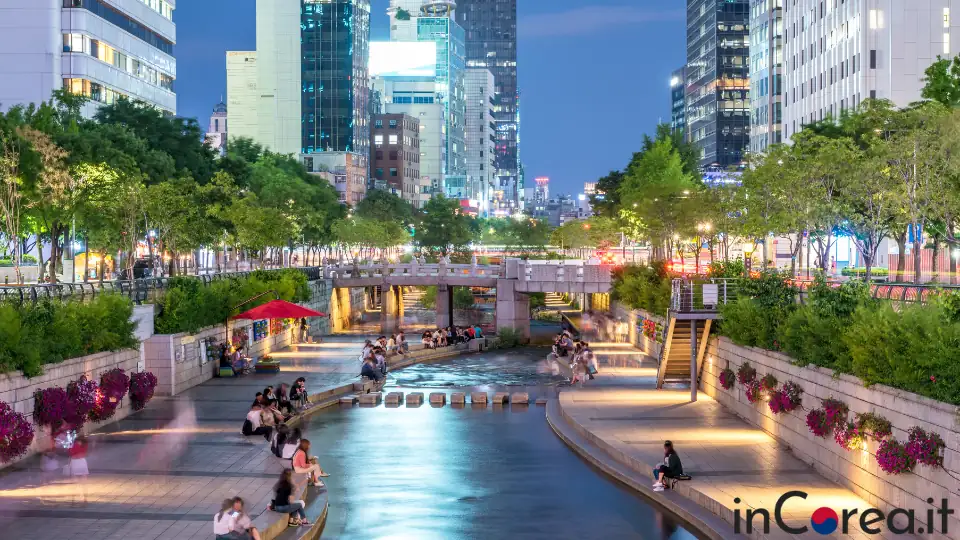
The Cheonggyecheon Stream is one of the most remarkable examples of urban renewal and environmental restoration in the heart of Seoul. Stretching for about 11 km, this short waterway has a history that dates back centuries, once serving as a vital river for the daily lives of Seoul’s citizens.
Originally known as Gaecheon after renovations during the Joseon Dynasty that turned it into a city drainage system, the stream was later renamed Cheonggyecheon during the Japanese colonial period.
With South Korea’s rapid industrialization, the area surrounding the stream deteriorated, and between 1958 and 1976 the waterway was covered by the Cheonggye Expressway, erasing much of its historical and cultural significance.
In 2005, however, an ambitious and world-renowned urban regeneration project uncovered and restored the stream, transforming it into a symbol of ecological and cultural rebirth.
Today, Cheonggyecheon serves as a true urban oasis — a place where both locals and tourists can gather, relax, and enjoy pedestrian bridges, public art, and a surprising richness of biodiversity in the middle of the city.
How to get to Cheonggyecheon Stream
The Cheonggyecheon Stream is easily accessible from different parts of the city, but the most popular starting point is Cheonggye Plaza. If you are near Gwanghwamun Square, you can simply walk along Sejong-daero Street — a stroll that beautifully showcases the contrast between Seoul’s ancient landmarks and modern skyscrapers — until you arrive at Cheonggye Plaza, the official beginning of the stream.
From Cheonggye Plaza: take Subway Line 1 to City Hall Station, and use Exits 4 or 5
From Gwanghwamun Square: take Subway Line 5 to Gwanghwamun Station, Exit 5.
Points of interest along Cheonggyecheon Stream
Walking along the Cheonggyecheon Stream, you’ll find numerous attractions that make the route even more fascinating. Highlights include the Candlelight Fountain, with its beautiful display of water and light, and the colorful Spring Tower, a modern symbol of Seoul’s renewal. The historic Gwangtonggyo Bridge, the largest stone bridge of the Joseon era, and the Tunnel Fountain, which lets visitors pass through a tunnel of cascading water, add both history and fun to the experience. For those interested in learning more, the Cheonggyecheon Museum tells the full story of the stream’s transformation. Finally, the Historic Laundry Site recalls everyday life in the past, when locals gathered here to wash their clothes.
The stream also connects you to some of Seoul’s most vibrant and historic neighborhoods: Myeongdong, famous for shopping and fashion; Insadong, known for art galleries and traditional crafts; and Dongdaemun, home to its bustling market and modern design. Each of these areas offers a wide selection of accommodations — many of which are reviewed in our guide to the best hotels in Seoul. Exploring Cheonggyecheon is therefore a unique way to discover these districts, thanks to its pedestrian paths, art bridges, and green spaces.
For an even more memorable experience, consider joining the Seoul Night Tour, which includes the illuminated Cheonggyecheon Stream among its stops. This guided tour also takes you through other fascinating sites such as the bustling Gwangjang Market, the historic Changgyeonggung Palace, and the scenic Naksan Park. Departures are available from both the Hongdae (Hongik University area) and Myeongdong. Full details, including prices, can be found at the link below.
Throughout the year, Cheonggyecheon Stream hosts some of Seoul’s most beloved cultural festivals and seasonal events:
Lotus Lantern Festival (Yeondeunghoe) — Late April to mid-May: Declared a UNESCO Intangible Cultural Heritage, this festival celebrates Buddha’s Birthday and culminates at Jogyesa Temple. Part of the program includes a stunning and atmospheric lantern display along Cheonggyecheon, creating a magical evening stroll.
Seoul Lantern Festival — From the first Friday in November for three weeks: This annual event transforms the stream into a dazzling sea of light, with both traditional and modern lanterns floating on the water or displayed along its banks. The festival attracts visitors from all over the world and also features plenty of Korean street food from food trucks.
Seoul Christmas Festival — December: During the holiday season, Cheonggyecheon is decorated with sparkling Christmas lights and themed installations, making it one of the most festive spots in Seoul.
Autumn on Cheonggyecheon: The stream is also a great place to enjoy fall foliage. A recommended route is to start your walk at one of these subway stations — Gwanghwamun, Jonggak, Jongno 3-ga, or Jongno 5-ga — and follow the river all the way to Dongdaemun Station, where the autumn colors are particularly beautiful.
We've detected you might be speaking a different language. Do you want to change to:

 Italiano
  English