
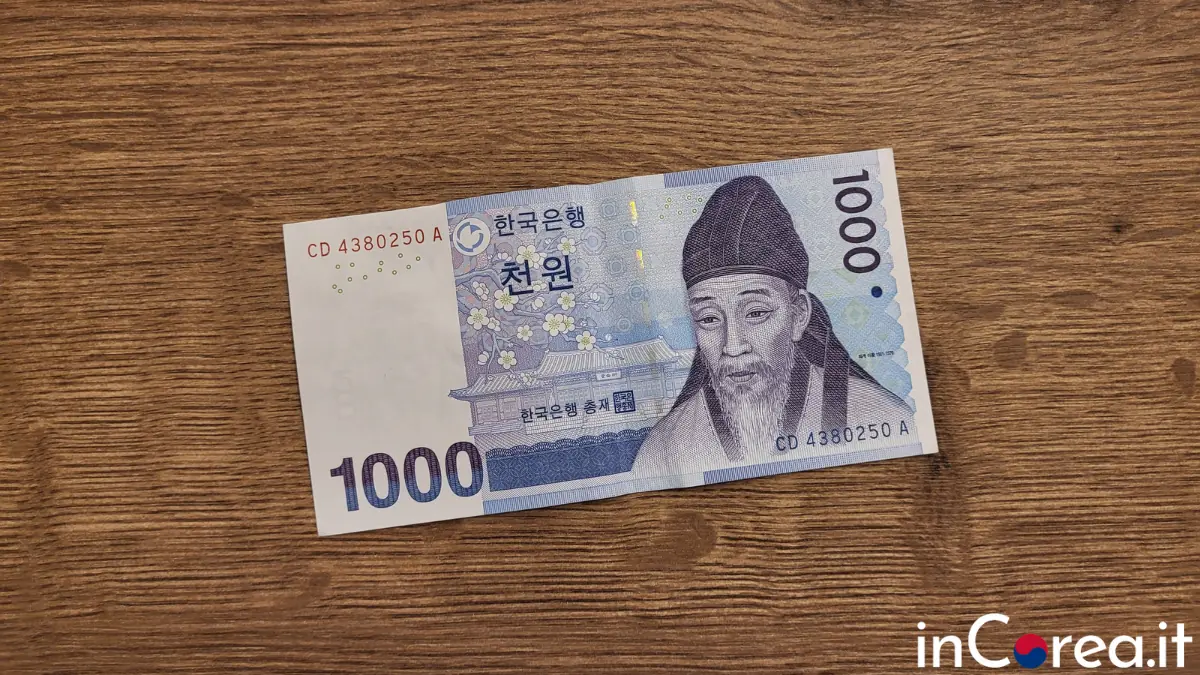
How and where to exchange money into Korean Won: payment guide for South Korea

Currency exchange in South Korea: Euro, USD, and local money to Korean Won – Payment guide
Article Index

Through this guide on payments in South Korea, you will discover how and where to exchange money into Korean Won, where to withdraw cash, how to use debit and credit cards, and most importantly, how to save money on exchange rates and transaction fees. I have organized the guide into questions and answers so that it is as clear and practical as possible.

I want to make a couple of important points before getting into the details. In South Korea, you generally won’t need to carry much cash with you, as most Koreans use credit or debit cards, or Samsung Wallet (formerly Samsung Pay), for virtually all everyday purchases.

You’ll mainly need cash in two situations: to top up your T-Money Card (although kiosks that accept card payments for top-ups are becoming increasingly common) and to pay at some markets and street food stalls. Regardless of how you choose to pay in South Korea, I also recommend carrying some cash in your home currency as a backup. You don’t need to bring a large amount, but having enough to get you through a few days can be useful in case of an emergency, such as a malfunctioning card terminal or a lost card.

It’s also very important to bring multiple cards and unlock them for worldwide use before departure (more details on this later). Personally, when I travel I always carry several debit/credit cards. For example, on my last trip to Korea my main card worked in very few stores, and I had to rely on another card I luckily had with me.

With these points in mind, let’s look at the best ways to exchange currency and pay in South Korea, and how to save money on currency conversion fees and banking fees.

How and where to exchange money into Korean Won

There are several ways to exchange foreign currency into Korean Won. If you don’t want to go through the entire list, the best and most convenient options are withdrawing cash using a Revolut card (even the free Standard version) or using WOW Exchange counters. For those who want to explore all the available choices, here is a breakdown:
  • Exchanging currency before traveling: many travelers prefer to arrive in Korea with some Won already in their pocket, as it feels safer. However, this is usually the most expensive option. Local banks and airport exchange offices abroad (in Europe, the US, or elsewhere) typically apply very high fees and unfavorable rates. For this reason, exchanging money before departure is possible but strongly discouraged.
  • Exchanging foreign currency in South Korea: this is generally the best option. Exchange rates in Korea are much better than abroad. You only need to bring some cash in Euros or US Dollars, or your local currency and exchange it at the airport, where you will immediately notice many bank counters. Rates in the city of Seoul are usually even more convenient: you can go to a bank (recommended) or to private “Money Exchange” counters (more common in Myeongdong, though slightly less favorable in price).
 
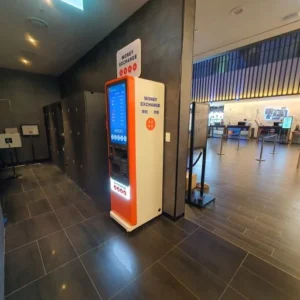
  • WOW Exchange: one of the most affordable options for exchanging foreign currency into Korean won in South Korea is the WOW Exchange network of self-service currency exchange kiosks. These automated kiosks offer competitive exchange rates and allow you to quickly exchange your cash for Korean won. They are also available at Incheon International Airport. They do not accept card payments for currency exchange, only cash. All you need to do is scan your passport and insert your cash, which will be converted into Korean won immediately. You’ll find many of these kiosks throughout Seoul, as well as in other cities such as Busan. For example, at the end of this section you can see the WOW Exchange kiosk located at the Holiday Inn where I stayed in Hongdae, which I also recommended in my Where to Stay in Seoul guide. You can also get a WOWPASS card at WOW Exchange kiosks, which I’ll discuss later in this guide.
  • Withdrawing Won at ATMs: another option is withdrawing money directly at Korean ATMs with your debit or credit card. At this point, the common question is: “Is it better to exchange cash or withdraw at an ATM?” The answer depends. With a Revolut card, withdrawing cash is usually cheaper than exchanging foreign currency. With traditional bank cards (European, American, or others), costs vary depending on the specific bank fees, so you’ll need to check your bank’s terms in advance. More details on this are in the next section dedicated to ATM withdrawals.
  • Withdraw cash with a Revolut card (the Standard plan is free): the most cost-effective option for getting Korean won in cash is using a Revolut card at an ATM in South Korea. This card is particularly useful for travelers because it allows you to withdraw cash with currency conversion and no Revolut fees up to €200 per month on the Standard and Plus plans (€200 is more than enough if you only need cash for topping up your T-Money Card, shopping at markets, and similar expenses). Premium plan users can withdraw up to €400 per month without Revolut fees. Once you exceed your plan’s free withdrawal limit, a 2% fee applies to the amount above the limit.
Wow Exchange counter for currency exchange from Euro to Won in Seoul
WOW Exchange at a hotel in Hongdae

How to withdraw money at ATMs in South Korea

Withdrawing cash from an ATM in South Korea works much like anywhere else. On most machines you will find a button at the bottom right of the screen that allows you to switch the language to English if you don’t know Korean. However, there are some important things to keep in mind:
  • Unlock your cards for global use before departure: you can usually do this directly from your banking app. If not, contact your bank.
  • Use “Global” or “Foreign Currency ATM” machines: only ATMs with these labels accept international debit/credit cards.
  • Prefer bank ATMs over independent ones: fees are usually lower, and they are more reliable. If your card gets blocked, you can go back to the branch during opening hours to resolve the issue.
  • Your local circuit card doesn't work abroad: to withdraw cash or pay in Korea, you need a Mastercard or Visa. Their usability depends on your bank and card type, so always bring at least two different cards with you.
  • How much does it cost to withdraw cash at an ATM in Korea? The cost depends on your bank, but when using a standard international debit/credit card you usually pay:
    - A fixed Korean bank fee (shown on the screen, around ₩5,000, about €3.50–$4)
    - A fixed fee from your bank (often €2–$3, or a percentage for credit cards)
    - A currency conversion commission (typically 2–4%)
  • How much does it cost to withdraw cash in Korea with Revolut? If you use a Revolut card, you only pay the Korean bank’s fee. With the free Standard plan, you get fee-free withdrawals up to €200 per month. With the Premium plan, the limit rises to €400. For most travelers, €200 - $220 in cash is more than enough for a two-week trip since most payments are cashless.
  • When withdrawing, ATMs often ask if you want to accept the Korean bank’s exchange rate. Always decline this option, your bank’s exchange rate is usually more favorable.
  • It’s better to withdraw larger amounts less frequently to reduce fees. For example, I usually withdraw around ₩200,000 (≈ €135 / $150) with Revolut upon arrival, and that is enough for my entire stay.

How to pay in Korea: card or cash?

There are several payment options in South Korea. Overall, the most cost-effective methods are using a Revolut card, a WOWPASS card, and in some cases even the simple T-Money Card.

  • Cash: this is the least convenient method, but you will still need some cash for topping up your T-Money Card, shopping at local markets, or buying street food. Always keep a small amount of cash on hand.
  • Debit or credit card: paying with your home bank card is convenient, but keep in mind that a currency conversion fee usually applies (on average 2–4% per transaction), plus possible service charges. Important: if the POS asks whether to pay in KRW (Won) or in your home currency, always select KRW. Paying in local currency avoids costly dynamic exchange rates.
  • Revolut card: by far the most convenient payment method. Revolut is designed for travel, and from Monday to Friday there are no conversion fees up to €1,000 / $1,000 per month with the free Standard plan (unlimited with Premium). Above this limit, the fee is 1% with Standard or 0.5% with Plus. A trick to avoid these fees is to pre-convert your money into Korean Won within the app before your trip (up to €1,000 / $1,000 per month at no extra cost). This way, you can exceed the monthly limit by converting gradually, and also avoid weekend exchange fees.
  • WOWPASS: this is a Korean prepaid payment card that also includes a T-Money Card for public transportation. It costs 6,000 KRW. Since it is a Korean payment card, you can use it like a regular credit card without additional payment fees at participating merchants. With the WOWPASS app, you can top up, freeze or replace your card, track your spending, and check exchange rates. You can purchase and top up the card at the WOW Exchange kiosks mentioned above, including with foreign cash, or order it through the official WOWPASS website. Unlike a standard T-Money Card, the T-Money balance included with WOWPASS can also be topped up through the app. If you already have a Revolut card, you probably won’t need a WOWPASS. However, if you don’t use Revolut and are carrying enough cash in your home currency, WOWPASS can be a convenient way to convert your cash into a card balance and make cashless payments in South Korea. You also won’t need to purchase a separate T-Money Card because it is already included.
  • T-Money Card: I recommend using your T-Money Card whenever possible to pay for taxis and purchases at convenience stores, in addition to using it for public transportation. If you want to learn more, check out our dedicated guides on WOWPASS (coming soon) and the T-Money Card.

Some final tips for saving money

If you want to save as much as possible on payments in Korea, here is a quick summary of the most cost-effective options for managing cash and transactions:

  • The absolute cheapest way to get Korean Won in cash is withdrawing with the Revolut card. Personally, when I arrive in Korea, I withdraw about 200,000 KRW with Revolut, and that amount is enough for the entire trip since I only use cash for the few services where cards are not accepted.
  • If you don’t have Revolut and need to exchange your Euros, US Dollars, or your local currency into Won, use a WOW Exchange counter (also available at Incheon Airport).
  • For payments, the cheapest option is still the Revolut card, which charges no additional fees.
  • L’alternativa a Revolut è comprare la carta WOWPASS ordinandola online oppure presso uno sportello WOW Exchange e potete farlo già nell’aeroporto di Incheon, così avrete subito sia la T-Money Card che una carta di pagamento al 100% funzionante in Corea e senza commissioni
  • All other payment methods involve fixed fees or currency conversion fees, which you can avoid by sticking to the options listed above.