The meeting was led by the deputy environment minister and was also attended by the ministries of transport, industry, and the National Fire Agency, according to an official report. Following the meeting, the government is expected to announce new regulations soon.
On Tuesday, transport ministry officials will hold talks with automakers, including Hyundai Motor Group, Mercedes-Benz Korea, and Volkswagen Group Korea, to discuss a proposal requiring the disclosure of the battery brands used in electric vehicles.
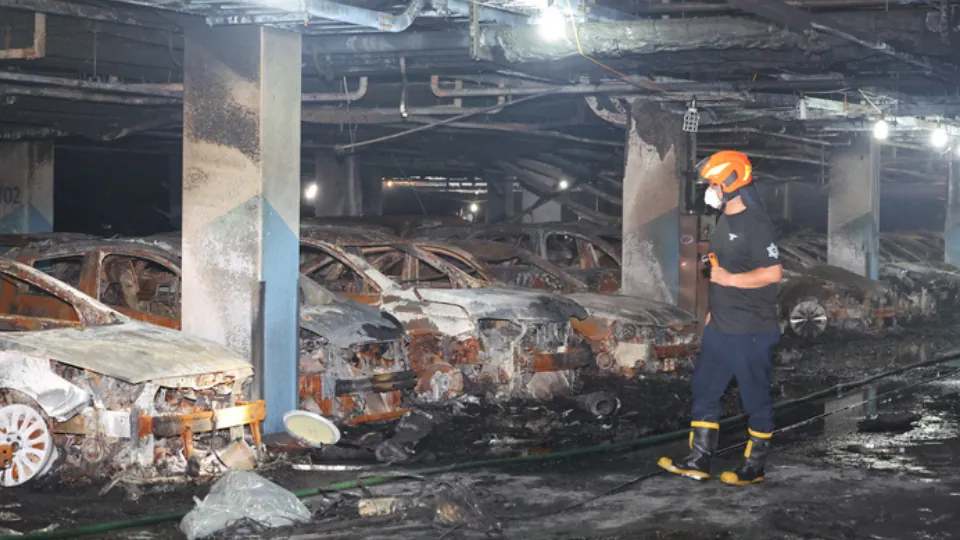
Images published in the media—showing dozens of burned-out cars reduced to little more than charred frames—have fueled consumer fears about electric vehicles, particularly since many South Koreans live in apartment buildings with underground parking garages.
Concerns had already been raised earlier this month when a Kia EV6 equipped with batteries from South Korean manufacturer SK On caught fire in a parking lot, according to fire officials. These back-to-back incidents are undermining consumer confidence in the safety of electric cars.
What causes the most concern is that fires in electric vehicles differ from those in internal combustion engine cars, as they often last longer and are more difficult to extinguish. According to a report released in February by the Seoul Fire and Disaster Headquarters, 1,399 underground parking garage fires occurred in South Korea between 2013 and 2022, 43.7% of which were attributed to vehicles.
The report also states that 53% of car fires in underground garages were caused by electrical issues—ranging from vehicle-related malfunctions to problems with the buildings’ electrical systems—highlighting the particular risks posed in these enclosed environments.
Last week, the Chosun Ilbo newspaper reported that South Korea was already considering requiring electric vehicle manufacturers to disclose the brand of the batteries installed in their cars. Currently, automakers are required to provide detailed information about vehicles—such as fuel efficiency and fuel economy—but they are not obligated to specify particular details about the batteries, including the manufacturer.
On Saturday, Hyundai Motor Company published on its website the names of the battery manufacturers used in its 13 electric vehicle models, including three models under the Genesis brand. It was revealed that Hyundai and Genesis EVs are equipped with batteries from LG Energy Solution (LGES) and SK On of South Korea, as well as from China’s CATL.
Moon Hak-hoon, a professor of automotive engineering at Osan University, stated that simply requiring automakers to disclose the brand of an electric vehicle’s batteries will not prevent fires. He explained that it would instead be more useful to certify the fire hazards of each brand of batteries.
Park Moon-woo, lead author of a report on fires in underground parking lots caused by electric vehicles, agreed that disclosure would provide consumers with more information but emphasized that there is currently no definitive data showing which brands of EV batteries are more prone to fires. Therefore, while requiring automakers to declare the brand of batteries would increase transparency, it would not necessarily provide greater safety assurances at this time.

 Italiano
  English