
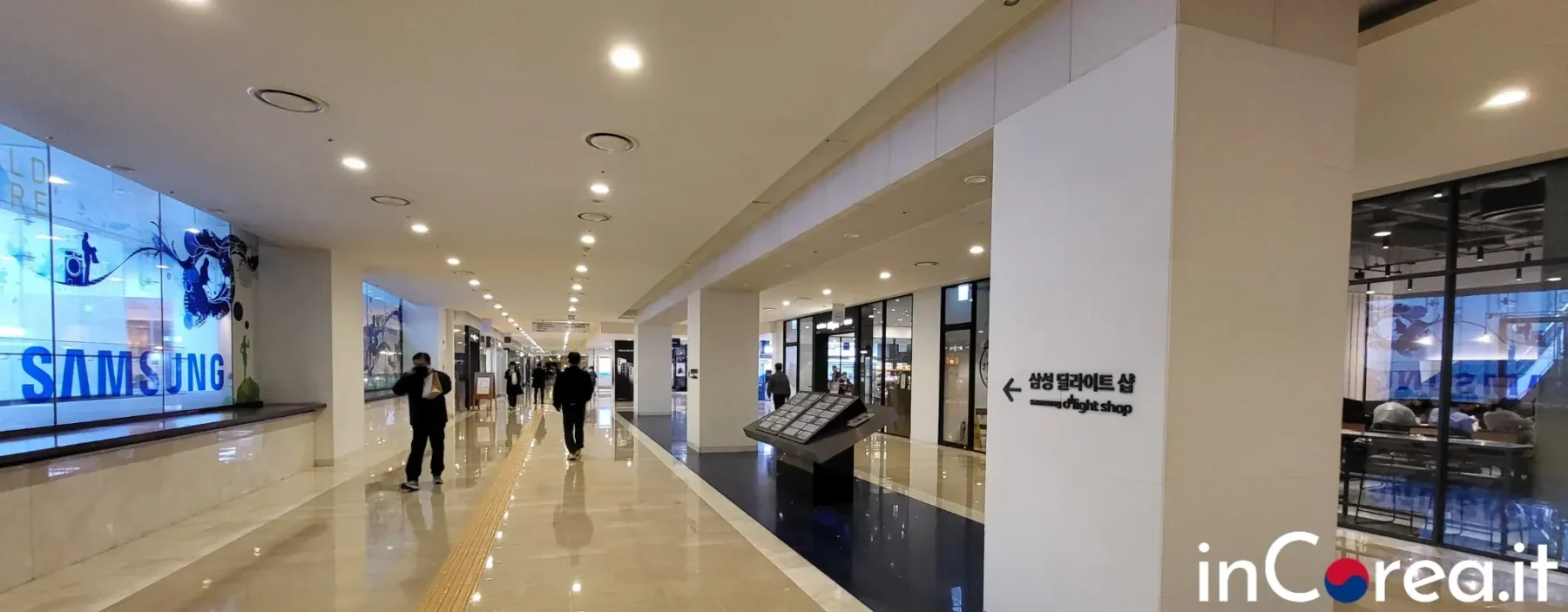
The history of Samsung is a compelling story of innovation, perseverance, and success. But where is Samsung from, and what are its origins? Founded in 1938 by visionary entrepreneur Lee Byung-chul, Samsung has become a cornerstone of the South Korean economy, contributing enormously to the nation’s development and welfare. Today, Samsung is the largest industrial conglomerate (chaebol – 재벌) in Korea and one of the biggest corporations in the world.
Samsung has played a leading role in South Korea's economic, political, media and cultural development, emerging as a major driving force behind the so-called "Korean economic miracle." Its affiliated companies account for about one-fifth of South Korea’s total exports, and Samsung’s revenue alone represents nearly 17% of the country’s $1.082 trillion GDP.
Over the decades, Samsung has expanded into a wide range of industries, including consumer electronics, telecommunications, construction, the naval sector, and semiconductor and chip production.
This diversification has helped build a solid industrial base, create thousands of jobs, and attract significant foreign investment, making Samsung not only a global technology leader but also a vital force in South Korea’s economic growth.
Samsung’s history began in 1938, when Lee Byung-chul founded the company in Daegu as a small export and trading business. Initially called Samsung Sanghoe, the company focused mainly on trading food and local products, specifically exporting noodles and other goods to China.
During the 1940s, Samsung expanded its operations by opening manufacturing plants in several Korean cities. Founder Lee Byung-chul emphasized a management philosophy centered on product quality and customer service, laying the foundation for the company’s future growth and success.
In 1947, Samsung moved its headquarters from Daegu to Seoul. However, the Korean War (1950–1953) brought severe challenges: many of Samsung’s operations were suspended or destroyed. To survive the devastation, the company relocated its headquarters from Seoul to the quieter city of Busan.
Despite these difficulties, Samsung proved its resilience and adaptability. After the war, the company quickly recovered and aligned itself with South Korea’s national reconstruction efforts. By 1954, Samsung had become the country’s largest wool producer. Taking advantage of South Korea’s growing industrialization, Samsung began to diversify its activities, expanding into electronics, construction, and insurance—sectors that would later play a crucial role in shaping its global success.
Toward the end of the 1960s, aware of the enormous development in the electronics industry in Japan and wishing to take an active role rather than simply be a spectator, the Samsung Group, which had already become South Korea's most prominent industrial group, embarked on the ambitious project of creating its own electronics industry. This ambitious plan involved massive investments in various divisions, including Samsung Electronics Devices Co., Samsung Electro-Mechanics Co., Samsung Corning Co. and Samsung Semiconductor & Telecommunications Co. The first production facilities were established in Suwon, South Korea, and in 1969 mass production of black-and-white televisions began.
In the 1970s and 1980s, the company that had once been focused on food products quickly transformed into one of the world’s leading electronics manufacturers. By 1974, Samsung’s factories had produced one million televisions—a figure that had quadrupled by 1978, making Samsung the first company in the world to surpass four million TVs produced.
That same year, 1974, Samsung took another major step into electronics by acquiring Hankook Semiconductor, marking its entry into semiconductor production. In 1977, Samsung began producing color televisions, followed two years later by microwave ovens, which achieved huge success in the U.S. market thanks to their competitive pricing.
But Samsung’s expansion during the 1970s was not limited to consumer electronics. In 1974, the company established Samsung Heavy Industries, focused on shipbuilding, as well as Samsung Petrochemical. In 1977, Samsung Construction was also founded, further diversifying the group’s industrial base.
The 1980s marked the beginning of Samsung’s global expansion. In 1982, a TV manufacturing plant was opened in Portugal, followed by new facilities in New York in 1984 and in Tokyo in 1985.
A major milestone came in 1987 with the passing of Samsung’s founder, Lee Byung-chul, on November 19. Following his death, the Samsung Group was divided into four independent companies: Samsung, Shinsegae Group, CJ Group, and Hansol Group. Samsung retained its core businesses in electronics, engineering, construction, and high technology, while the other groups took over different sectors.
By 1989, Samsung had reached the milestone of 20 million color TVs sold worldwide, solidifying its reputation as a global leader in consumer electronics.
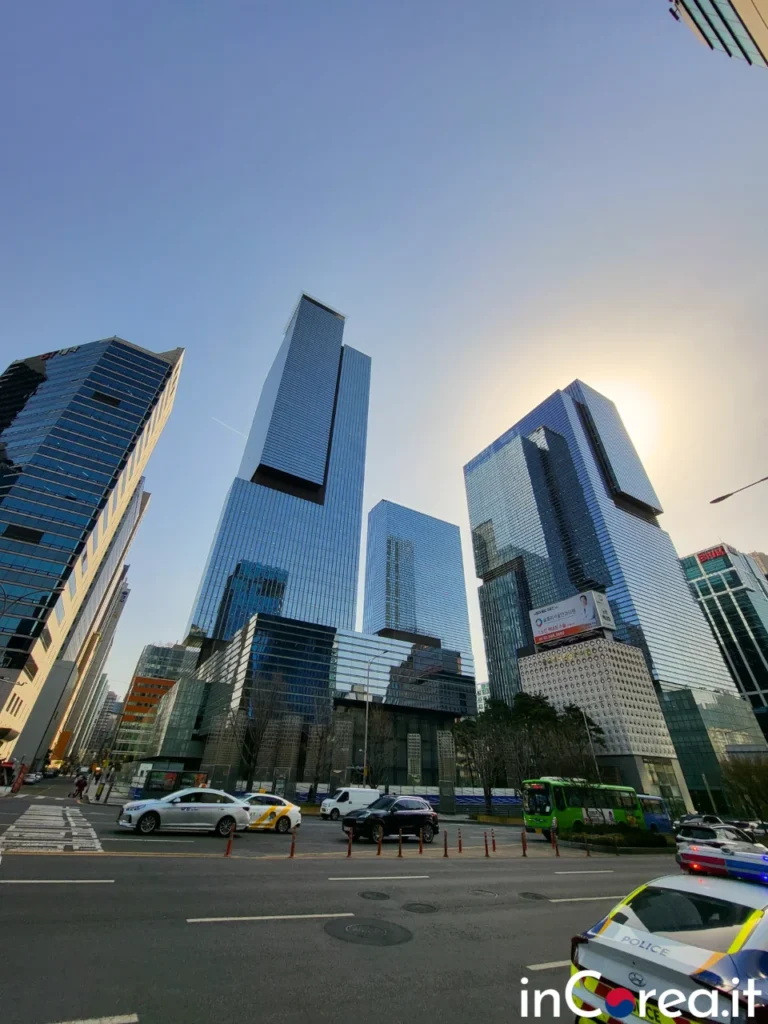
In the 1990s, Samsung accelerated its growth as a global company while maintaining its headquarters in Samsung Town, Seoul. These were record years for the group, marked by rapid international expansion and diversification.
Samsung’s construction division won major contracts to build some of the world’s most iconic skyscrapers, including the Petronas Towers in Malaysia, Taipei 101 in Taiwan, and the majestic Burj Khalifa in the United Arab Emirates. These projects highlighted Samsung’s expertise and its growing reputation in large-scale engineering and construction.
In 1992, Samsung became the world’s leading manufacturer of memory chips, surpassing Intel and cementing its position as the second largest global chipmaker. This milestone marked the beginning of Samsung’s dominance in the semiconductor industry, which remains one of its strongest business pillars today.
The following year, Lee Kun-hee, the new chairman, initiated a major reorganization of the Samsung Group. Ten subsidiaries were liquidated as part of his strategy to streamline the business and focus on three main areas: electronics, engineering, and chemistry. In 1995, Samsung developed its first liquid crystal display (LCD), showcasing its innovative capabilities. Within a decade, Samsung would become the world’s top producer of LCD panels, setting global industry standards.
The decade ended with Samsung leading global sales of flat-screen TVs. In 1999, the company unveiled the world’s first prototype of a 3D LCD TV and launched the first cell phone with an integrated MP3 player—a pioneering step that paved the way for the future of mobile multimedia devices. Although the early model could only store a handful of songs, it laid the foundation for the powerful smartphones and music devices that would follow.
Beginning in the early 2000s, Samsung set a remarkable series of records that established it as the world’s leading manufacturer of consumer electronics. In 2005, Samsung became the world’s largest producer of televisions, a position it still holds today. This period also marked the start of a digital revolution in the electronics industry, as companies were forced to redefine their devices in order to compete with powerful emerging rivals.
The mobile phone industry at the time was stagnant, waiting for the next major innovation: the smartphone. In June 2009, Samsung launched the first model of the now-iconic Galaxy S series, a line of devices that quickly propelled the company into the Android ecosystem. Just three years later, in 2012, Samsung overtook Nokia to become the world’s leading producer of mobile phones and smartphones, generating multibillion-dollar revenues—a position it continues to hold.
In 2010, Samsung announced its development strategy for the following decade, focusing on five key business areas, including mobile devices, electronics, and biopharmaceuticals. In particular, it invested billions of dollars in biopharmaceuticals and established a major partnership with industry leader Biogen. Samsung’s product portfolio expanded rapidly. In 2010, it introduced its first tablet and the revolutionary Galaxy Note, designed for professionals. In 2013, it launched its first smartwatch. These innovations helped Samsung consolidate its global presence and build the foundations of a connected Galaxy ecosystem, where multiple devices interact seamlessly. The company’s focus on innovation led to cutting-edge features such as Edge displays with curved screens, iris recognition technology, and eventually, in 2019, the first foldable smartphones.
By 2015, however, Samsung faced its first major crisis. Its steady growth in market share stalled as Apple strengthened its dominance in developed markets and Chinese brands surged in emerging economies. The situation worsened in 2016 with the infamous launch of the Galaxy Note 7, plagued by overheating issues and, in some cases, exploding batteries. The device was withdrawn from the market shortly after release, causing Samsung to lose billions of dollars and triggering an 8% drop in its stock value. In 2017, Samsung attempted a comeback by reintroducing the device as the Galaxy Note FE (Fan Edition), featuring a redesigned battery. While this helped the company restore some consumer trust, the Note 7 crisis remains one of the most challenging episodes in Samsung’s corporate history.
Despite the severe crisis of the Galaxy Note 7, Samsung managed to recover quickly. In November 2016, the company announced the massive acquisition of Harman Kardon, a historic brand specializing in high-end audio systems and connected car technologies. The $8 billion deal—the largest acquisition in Samsung’s history—served two purposes: to restore the company’s international image after the Note 7 incident and to secure a strong foothold in the smart car IoT market, where Harman was already a leader.
After overcoming the crisis caused by the Samsung Galaxy Note 7, the South Korean company faced another major challenge. Following a judicial investigation conducted in South Korea, which also involved the country’s president and eventually led to her resignation, smartphone division president Lee Jae-yong, as well as the designated heir to the company’s leadership, was accused of corruption, perjury, and embezzlement. The investigation later resulted in his arrest by a South Korean court. This event represented a major blow to Samsung, as the company’s future leadership was closely tied to him. The legal case was ultimately resolved in 2022, when Lee Jae-yong received a presidential pardon so that he could return to work and help “lead the country’s growth engine by actively investing in technology and creating jobs.”
Between 2017 and early 2018, Samsung launched three flagship devices that achieved critical and commercial success: the Galaxy S8, Galaxy Note 8, and Galaxy S9. These models set new trends in the smartphone industry, introducing thinner bezels and the 18:9 aspect ratio screens that became a global standard. Despite scandals and setbacks, Samsung continued to report strong financial results. The company not only recovered from its crises but also consolidated its reputation as one of the world’s most innovative and resilient technology leaders.
The Galaxy series has not faced any major setbacks since then. In 2026, Samsung introduced the Galaxy S26, Galaxy Z Flip7, and Galaxy Z Fold7, all flagship smartphones that have been achieving strong success and further reinforcing Samsung’s leadership in the global smartphone market for the past 12 years.
The same can also be said for all the other sectors in which Samsung operates. The company is the global leader in home appliance sales in many countries and is heavily investing in the smart home sector and in reducing the energy consumption of its devices. In addition, Samsung is one of the electronics companies most committed to sustainability, with an investment plan worth more than €5 billion announced in 2022. The company introduced a new strategy to address climate change by increasing the use of energy from renewable sources, developing technologies to create eco-friendly products, continuously reducing the use of harmful substances in its devices, and promoting water recycling and reuse. You can find more details on what Samsung is doing for the environment and on its future environmental sustainability plans at these links. Driven by chip production to meet the massive demand generated by the AI boom, Samsung also surpassed the milestone of $1 trillion in market capitalization in 2026, becoming only the 12th company in the world to achieve this result.
La storia di Samsung è molto importante per la Corea in quanto si intreccia a doppio filo sia con il suo miracolo economico che con la diffusione della cultura pop coreana che anche grazie a Samsung è stata esportata in tutto il mondo.
 Italiano Italiano Italiano
  English Italiano Italiano Italiano English